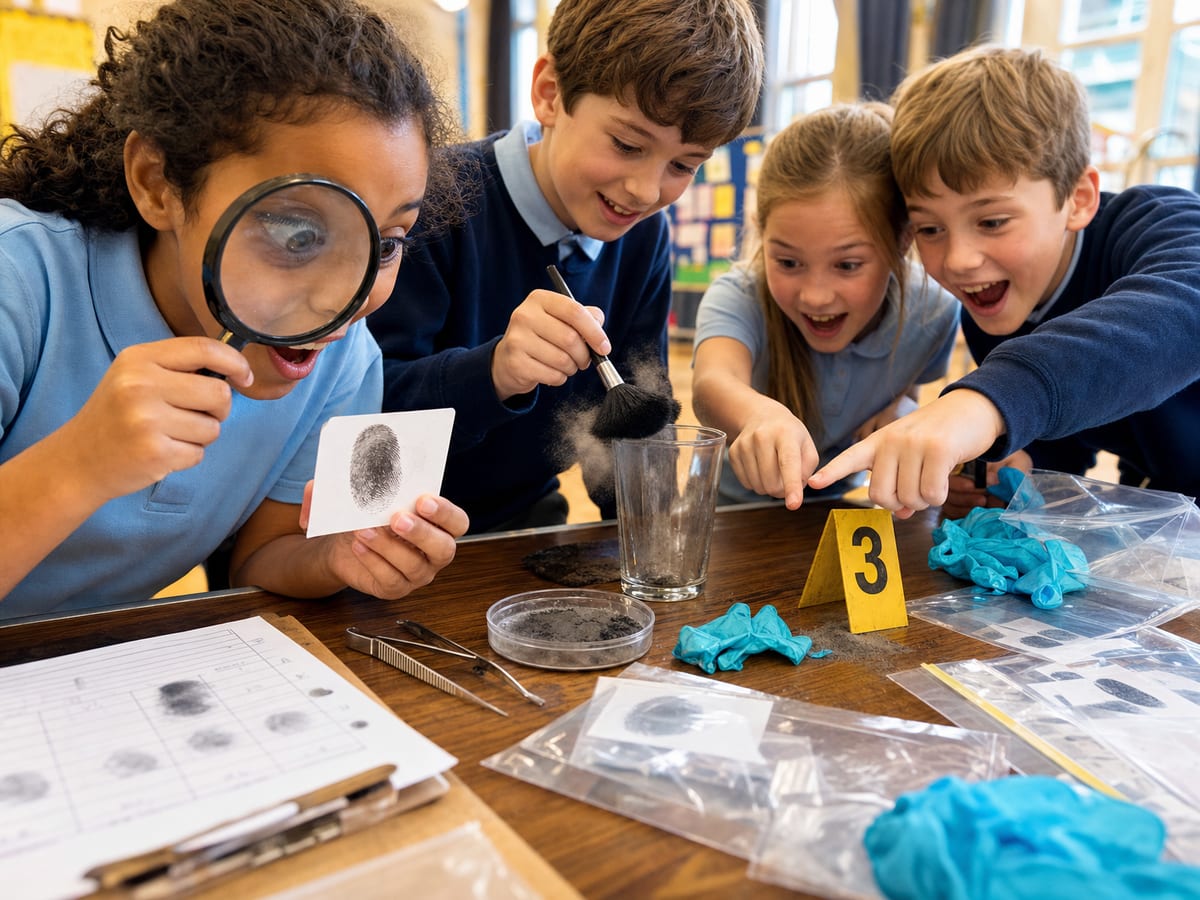
Forensic Science
A crime has been committed. The class has to solve it.
About this workshop
The context of a scientific investigation brings science to life. In this workshop children practise the skills that matter most - observing, exploring and asking questions - to develop a solid foundation for scientific study.
A crime has been committed and the class must work together to piece the evidence together. Choose Dognapped, where the prize pooch has vanished on the day of the dog show, or Stolen Money, where someone has broken into the school safe and taken the cake sale takings.
Young investigators tape off the area to protect the scene, then identify, collect, interpret and analyse the evidence: fingerprints, impressions, hairs and fibres, "blood", bones and DNA. Can your class solve the mystery?
How the session runs
What happens
- 01
The crime scene
The investigation opens at a safe that has been broken into, with objects scattered on the floor and a footprint left in the sand. The children study the scene and decide for themselves which objects are worth collecting.
- 02
Collecting evidence
They learn how investigators lift evidence without contaminating it - tweezers for the small items, a separate bag for each find. Magnifying glasses bring up the details, and crime scene tape protects the area.
- 03
Fingerprints
Fingerprints are unique to every person, so a print at a scene can be matched to a suspect. The children compare the prints they have recovered against the suspect board.
- 04
Footprints and identification
A footwear pattern can be matched just as a fingerprint can. The children measure the print in the sand against each suspect's details, and a dropped ID card gives them another clue.
- 05
DNA evidence
DNA is the genetic material in every living cell, and traces of it can be left on something a person has handled. One item at the scene carries it, and the children can request a test to rule suspects in or out.
- 06
Solving the crime
The children put the fingerprints, footprints, identification and DNA side by side rather than trusting one clue. Eliminating suspects as they go, they work out who was responsible.
What pupils will learn
The science they take away
We created the workshop alongside a former detective to hit key science curriculum targets.
- 01How to observe closely and record what is actually there, not what they expect
- 02That fingerprints are unique, and how they are lifted and compared
- 03How fibres, hairs and impressions place a person at a scene
- 04The difference between evidence and assumption
- 05How to work as a team where each member holds part of the answer
- 06How scientific reasoning is used in real jobs outside school
Curriculum links
What this covers in the National Curriculum
Science - Working scientifically
- Understand that forensic science uses evidence to work out what happened and who was responsible.
- Recognise that fingerprints are unique to an individual and can be used to identify a person.
- Understand that footwear patterns can be compared with prints found at a scene.
- Understand that DNA is found in the cells of living things and can identify or eliminate a suspect.
- Understand why evidence must be collected carefully to prevent contamination or loss.
- Draw conclusions from evidence rather than guesswork, and combine several pieces of evidence to make a stronger case.
In your school
Nobody names a suspect until the evidence says so. That is science.
Logistics
What we bring, what you need
We bring
- A complete crime scene, including tape, markers and staged evidence
- Fingerprint kits, casting materials and analysis equipment
- A DBS-checked facilitator to lead every session
- Case files and suspect profiles for the whole class
You provide
- A classroom or hall that can be set up as the scene
- Tables for the analysis stage
- A member of school staff present in each session
Questions schools ask
Before you book
- Is the crime scene frightening for younger children?
- No. The scenarios are deliberately light - a missing show dog or a raided cake-sale tin - and there is never a victim.
- Which storyline should we choose?
- Dognapped suits KS1 and lower KS2, Stolen Money works well with Years 5 and 6. Tell us when you book.
- Do the children need to know anything beforehand?
- No. The session teaches the technique as it goes, so a class that has never handled evidence starts on equal footing with one that has.
- Can we run it for the whole school?
- Yes. Six sessions in a day covers a one-form-entry school.
Feedback from schools
What schools said
Five-star Google reviews of Education Group, who deliver our workshops. Reviews naming this workshop come first.
We had Chris come and lead Forensic Science workshops all day at our school and the buzz around our site during the day was electric! All the children and staff were talking about it. We would absolutely recommend - as it brought the idea of forensics to life for our Year 1 to 6 children.
We had two workshops at our school: one on fossils for our younger students and the other exploring forensics for our older ones. Both were excellent and the students were engaged and enthusiastic. We are going to book the two workshops again for the summer term.
Our VR workshops were a huge success with both our Year 3 & 4 pupils. The staff member who delivered the workshop was great with the children and engaged them to discuss their learning throughout the sessions. Thank you!
Also popular
Pairs well with
 Hands-on
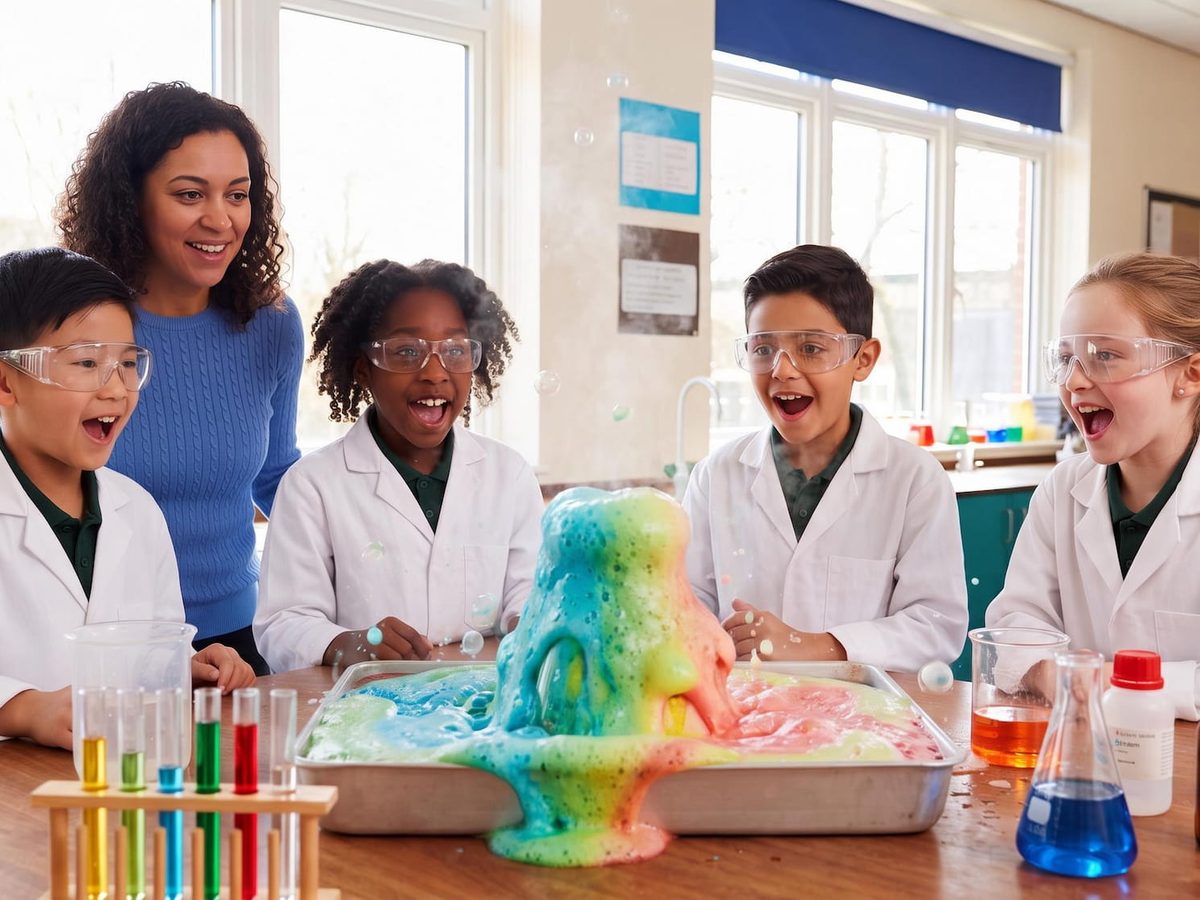
Science Faction
Live experiments with the wow factor - and the concept behind it.
EYFS - KS245 - 60 minutes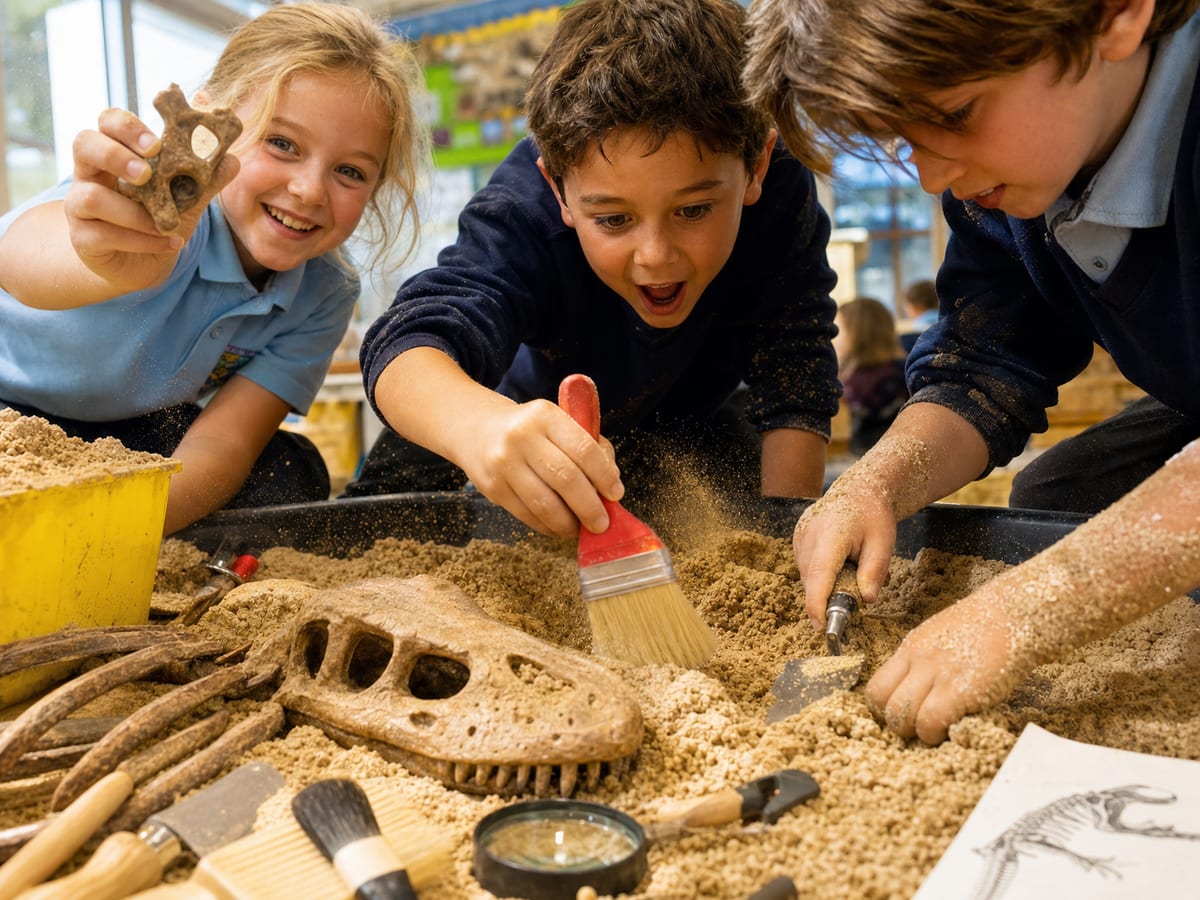 Hands-on
Dinosaur & Fossil Dig
Hands-on digging for replica fossils.
EYFS - KS245 - 60 minutes VR
VRHuman Body in VR
Shrink to the size of a molecule and look at the inner workings of the human body.
KS1 - KS245 - 60 minutes